What therapy is
A talking therapy is a course of regular conversations with a trained professional, held for the purpose of working on something specific.
The plain meaning
The conversation is the method. There is no equipment and no procedure; what makes it a therapy rather than a conversation with a friend is that it is structured, confidential, held to a regular time and length, and directed at something the two people have agreed to work on.
The professional does not take the person's side in their life, and does not carry the relationship outside the room. That distance is deliberate, and it is what makes it possible to say things in a session that are hard to say elsewhere.
How a course of sessions works
Most courses follow the same broad shape. A first meeting establishes what the person wants to work on and whether this professional and this approach are the right fit. A run of regular sessions follows, usually weekly and usually the same length each time. A review then decides whether to continue, to change something, or to close.
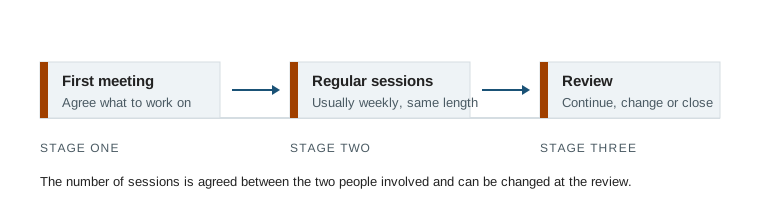
The number of sessions is agreed rather than fixed in advance by anyone else, and it can be revisited. Some approaches work to a set block from the start; others are open-ended and reviewed periodically. Talking therapies sets out how each approach handles this.
What therapy is not
- It is not advice. A professional will rarely tell a person what to do, and a course that consists of instructions is not usually what is meant by therapy.
- It is not a diagnosis. Assessment and diagnosis are separate pieces of work, and not everyone who has therapy has been diagnosed with anything.
- It is not medication. Some people have both, some have one, some have neither; the decision belongs with a qualified professional.
- It is not a test that can be passed or failed, and stopping is not a failure. Ending at an agreed point is part of the design.